Our History
From the Paris Chapter (1897) to recognition as a public benefit organization – Presidents, colors and insignia
History of the Society in France of the Sons of the American Revolution
Founding of a Chapter in Paris in 1897
At the founding meeting of the National Society of the Sons of the American Revolution (NSSAR) on April 30, 1889, in New York, a Frenchman, Edmond, marquis de La Fayette (1818–1890), was among the seventeen vice-presidents elected that day. At the time, however, he likely represented only himself — and his illustrious grandfather, of course!
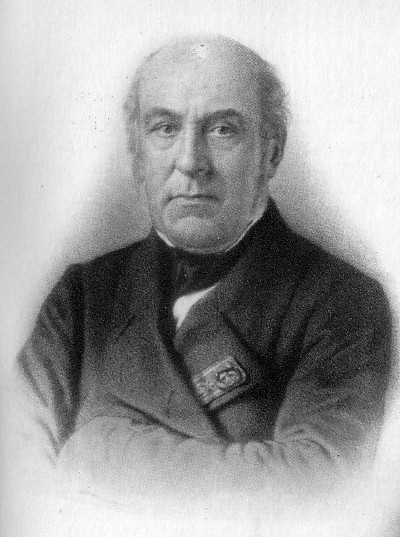
Edmond du Motier, marquis de La Fayette
Nevertheless, the principle of admitting descendants of French combatants into the Sons had been quickly accepted by the NSSAR. Likewise, the possibility for them to form Chapters, officially recognized by the NSSAR, had been established.
However, it was not until September 16, 1897, that a Chapter was created in Paris, under the energetic impetus of General Horace Porter, former President General of the NSSAR from 1892 to 1897, when he was appointed United States Ambassador to Paris. This first Chapter brought together some thirty members, all American, under the presidency of Lieutenant Commander Walter J. Sears of the US Navy.
The early years were difficult, as the Third Republic was very suspicious of associations, whether they gathered French citizens or foreigners. It was not until the beginning of the 20th century that associations were able to develop, henceforth governed by the law of July 1, 1901.
From 1899 to 1905, General Horace Porter took an active part in the search for the remains of Captain John Paul Jones, one of the figures of the young American navy during the War of Independence, who died in Paris in 1792. His remains were found in the former Saint Louis cemetery, on rue de la Grange aux Belles, which had become wasteland, and were solemnly transferred in 1906 to the Naval Academy at Annapolis.
In 1910, the Chapter was presided over by General Porter and had eighteen members; the annual meeting was held on April 19, the anniversary of the Battle of Lexington. By 1913, it had only 13 members.
They had adopted the custom of gathering on Independence Day at the tomb of the marquis de La Fayette, in the Picpus cemetery, where the victims of the revolutionary tribunals, guillotined at the Place de la Nation, rest alongside their families.
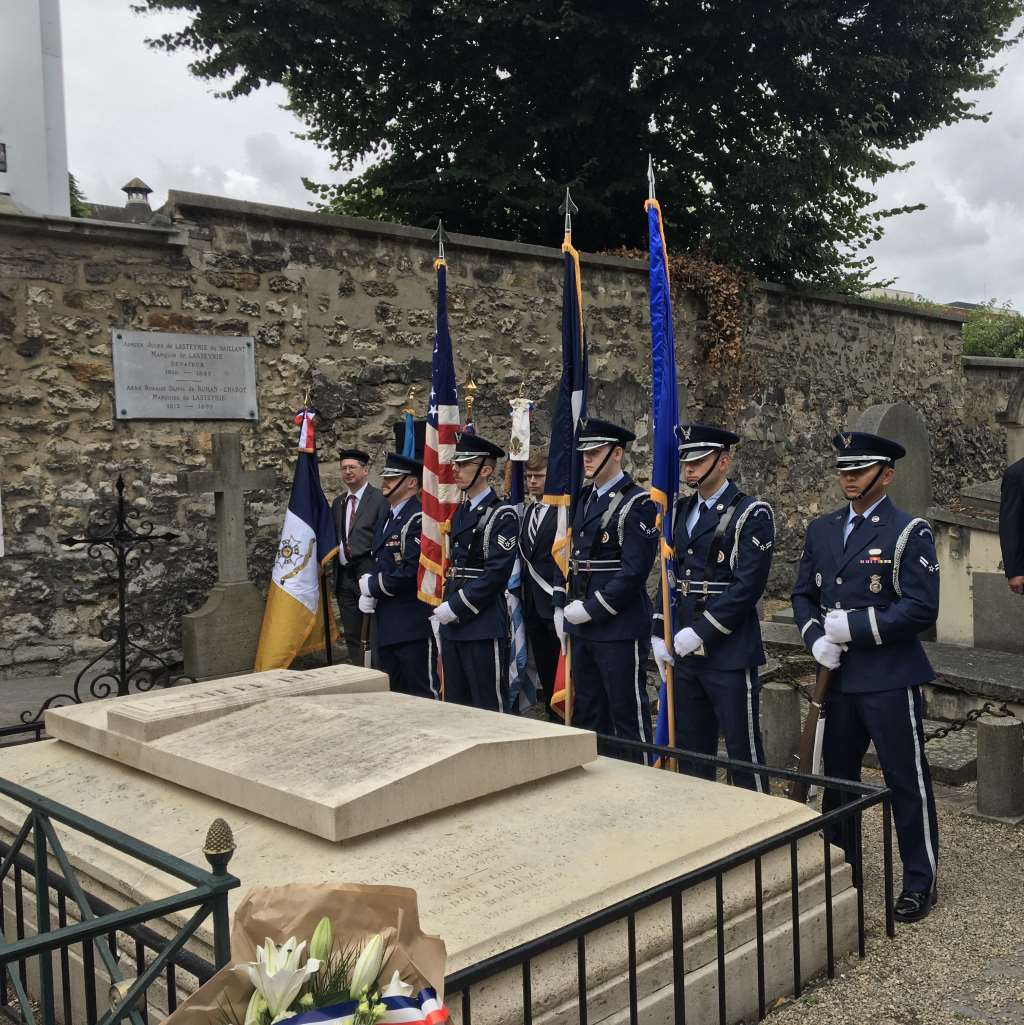
The SAR flag and the United States color guard. Picpus Cemetery, July 3, 2024
From 1917 onward, they organized a very simple ceremony during which, every July 4, the flag is renewed for a year. The old flag is lowered, carefully folded, and solemnly presented to a patriotic association or a person to be honored. It should be noted that this flag, first unfurled by United States Ambassador Edward Livingstone on July 4, 1834, the year of La Fayette’s death, has never ceased to fly — even after the United States entered the war against Germany in 1942. The cemetery keeper, Monsieur Bernières, renewed it twice, in complete discretion. German officers who visited the cemetery did see the Star-Spangled Banner, but presumably did not report it to their superiors. On July 4, 1945, the tradition was able to resume, and it continues every July 4 to this day.
After the First World War, under the impetus of an American SAR member living in Paris, Edward H. De Neveu, and the United States Ambassador to Paris, Myron T. Herrick, a convinced Francophile, the French Chapter saw its ranks strengthened by numerous descendants of French officers who had fought in the theaters of the War of Independence. Among those who joined were descendants of General de La Fayette, Maréchal de Rochambeau, and Admiral de Grasse.
The Beginnings of the Society in France of the Sons of the American Revolution
On October 19, 1926, the NSSAR authorized the French Chapter to become a full-fledged society, and on February 4, 1927, the Society in France of the Sons of the American Revolution was created. It was the first time a non-American Sons society had come into existence. The first Board was composed of five Frenchmen and three American citizens. The marquis de Chambrun was president, assisted by two vice-presidents: Edward H. De Neveu, the driving force behind the transformation of the Chapter into a Society, and Major Albert B. Cudebec, an alumnus of the prestigious Cornell University, who had served as an Engineering officer on General Pershing’s staff. The vicomte Charles Benoist d’Azy held the combined roles of Secretary General and Treasurer, and the comte de Luppé was archivist. The marquis de Rochambeau completed the Board, along with the duc de Broglie and Francis Warrington Dawson II, known as a journalist and diplomatic chronicler under the name Warrington Dawson. He was Secretary General of the Association of Foreign Journalists in Paris.
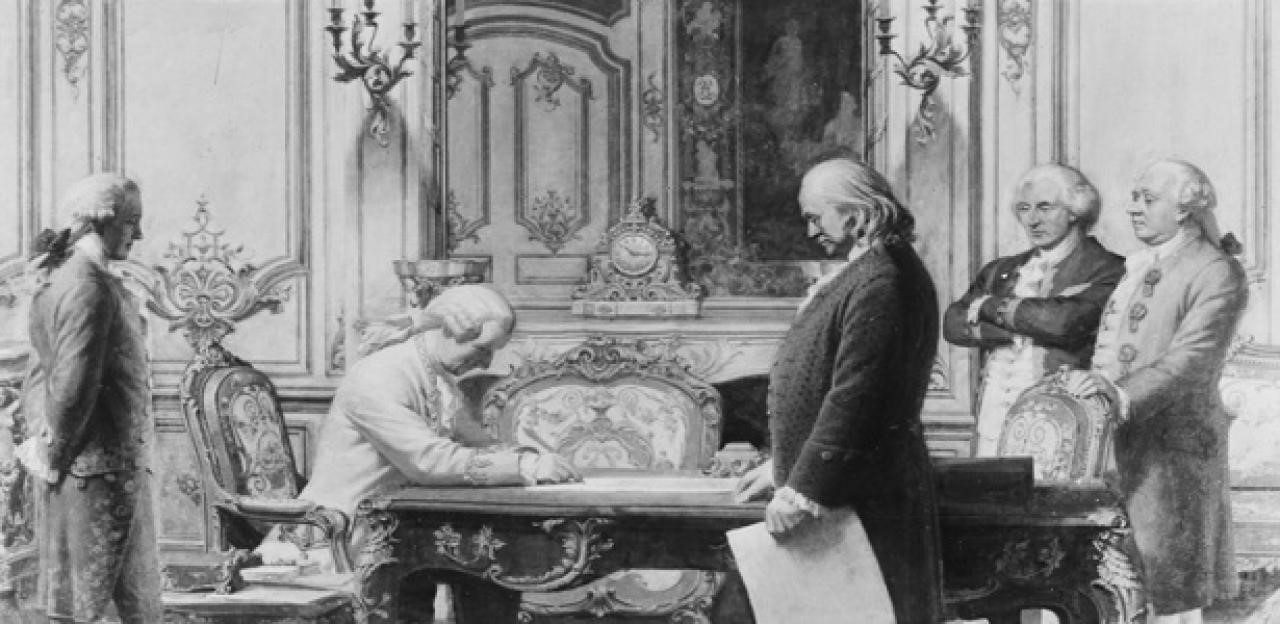
Signing of the Franco-American Treaty of Alliance, February 6, 1778, in Paris
Presidents of the Society in France
Four members of the Pineton de Chambrun family, each possessing a very strong personality, successively held the presidency of the Society until 1988. Their ancestor was Virginie de Lasteyrie du Saillant, the youngest daughter of Gilbert de La Fayette and his wife Adrienne de Noailles. Pierre de Chambrun, a member of parliament and then senator for Lozère, was succeeded by his brother Charles, Ambassador of France and member of the Académie Française. In 1952, the last of the three brothers, General Aldebert de Chambrun, took over. He passed the torch in 1958 to his son, René de Chambrun, who led the Society for thirty years, until 1988. A lawyer admitted to the bars of Paris and New York, and president of the Baccarat crystal company, his godfather was William Taft, 27th President of the United States. At his marriage to Josée Laval, his witnesses were General Pershing and his aunt Alice Lee Roosevelt, wife of his mother’s brother Nicholas Longworth, and the daughter of Theodore Roosevelt, 26th President of the United States!
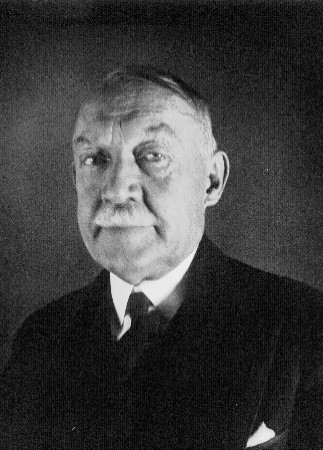 | 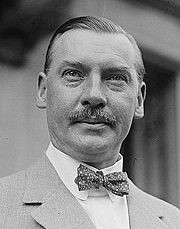 | 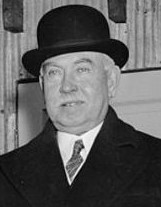 | 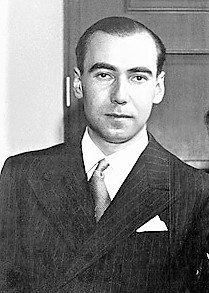 |
| Pierre de Chambrun | Charles de Chambrun | Aldebert de Chambrun | René de Chambrun |
In 1988, the comte Michel de Rochambeau, another illustrious name from the War of Independence, took over, before passing the torch in 1992 to Hélie de Noailles, duc d’Ayen and later duc de Noailles. He in turn handed it over in 2014, after twenty-two years in office, to Martin Boyer, who in 2022 passed the baton to Patrick Mesnard.
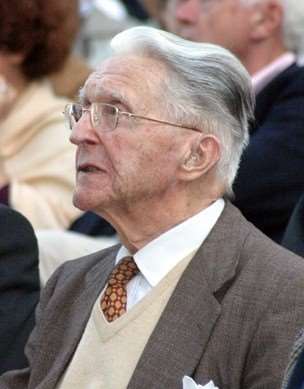 | 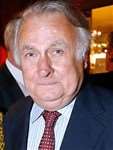 | 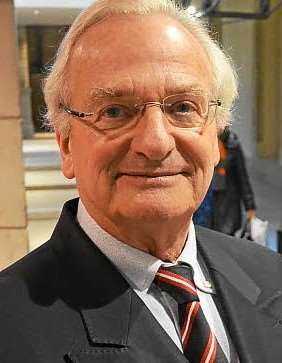 | 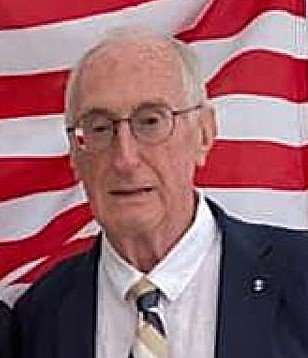 |
| Michel de Rochambeau | Hélie, duc de Noailles | Martin Boyer | Patrick Mesnard |
A Few “Immortal” Board Members
Three members of the Académie Française served on the Society’s board of directors: Charles de Chambrun, mentioned above, Maurice de Broglie, and René de Castries.
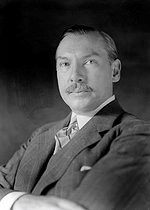 | 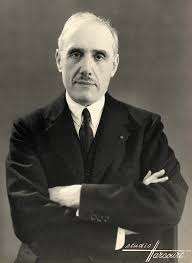 | 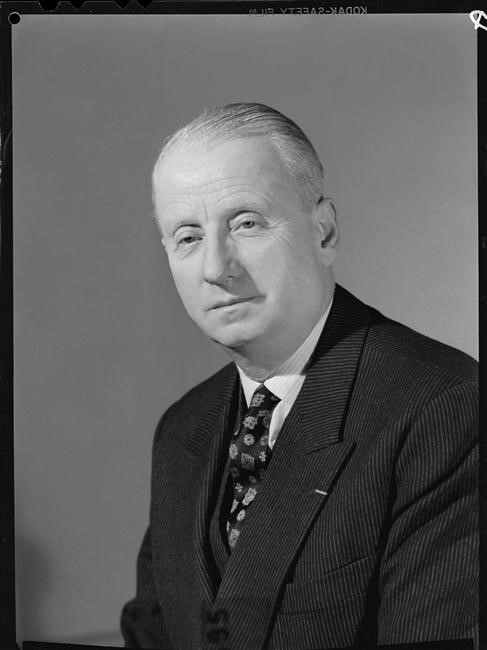 |
| Comte Charles de Chambrun | Maurice, duc de Broglie | René de La Croix, duc de Castries |
The Society also counted among its members two lieutenant generals: Aldebert de Chambrun, already mentioned, and Paul Hazan, head of the Historical Service of the Armed Forces and later commander of the troops in Tunisia and member of the Académie des sciences coloniales.
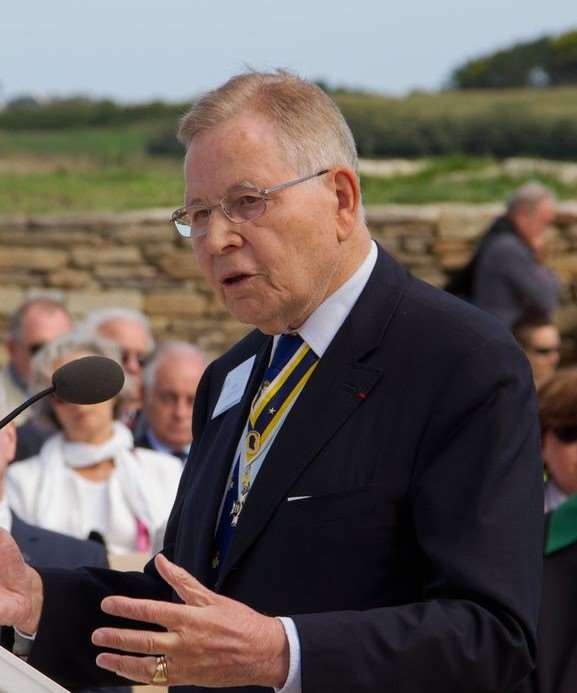
Jacques de Trentinian
It is also fitting to mention Jacques, comte de Trentinian, Historian of the Society, who passed away in 2017. A “one-man band” on the Board, an outstanding organizer of trips to American battlefields, he possessed an encyclopedic knowledge of the War of Independence. As leader of the History Committee, he defended, “inch by inch,” as Vice-President General for the Europe District of the NSSAR, the primordial role of France in the process of achieving American independence, which some sought to call into question.
Key Dates
- October 19, 1926: The NSSAR authorizes the French Chapter to become a full-fledged society
- February 4, 1927: The Society in France of the Sons of the American Revolution is created. It is the only non-American state society
- July 2, 1934: Declared as an association under the law of 1901
- October 14, 1989: At the instigation and with the support of the Society in France, a monument is erected on the battlefield of Yorktown, recalling that more than 75,000 French citizens participated in the War of Independence and that more than 15,000 of them gave their lives during operations
- First half of 2010: Judge Edward Butler, then President General of the National Society, came solemnly to Paris to sign the agreement making the Society in France a partner society of the American societies with a special status of semi-autonomy. This status, which includes the exchange of honorary presidents and vice-presidents, grants greater organizational latitude to the Society in France, while recognizing its role as the representative of the only nation directly allied with the United States during the war for their independence. Nevertheless, members of the Society in France continue to be full members of the great family of the Sons of the American Revolution
- December 31, 2013: The Society in France is recognized as being of public benefit (Official Journal of January 3, 2014)
The Colors of the Society of the Sons of the American Revolution
In 1890, at the Louisville Congress, blue and white were adopted as the colors of the Society of the Sons of the American Revolution. These colors were also those of the Society of the Cincinnati, although the blue of the Sons was darker than that of the Cincinnati. In 1898, at the 9th Congress held in Morristown, New Jersey, a third shade was added: buff. These three colors were those of the uniforms worn by General Washington’s troops during the War of Independence. They are the colors that now adorn our insignia and fly on our flag.
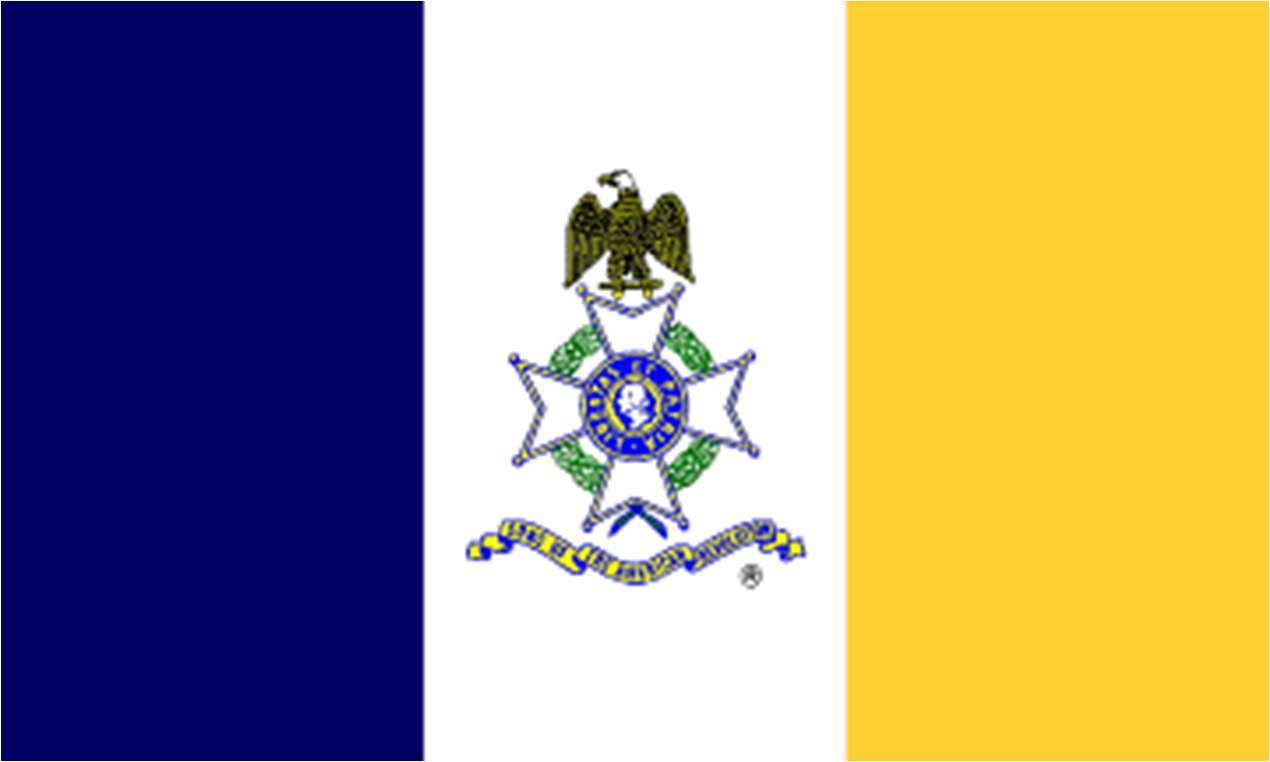
The colors of the Society of the Sons of the American Revolution
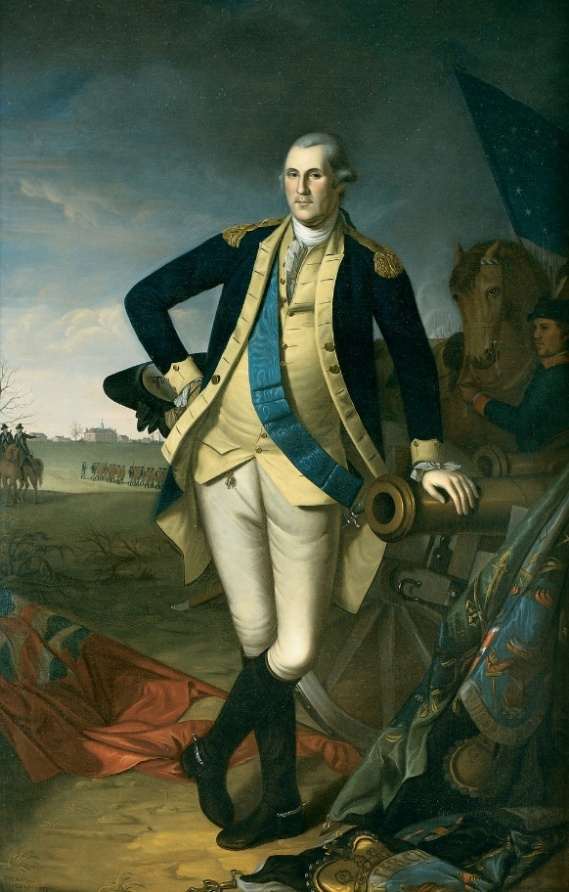
George Washington
The Insignia of the Society of the Sons of the American Revolution
The insignia of the Sons of the American Revolution was designed and created in the 1890s by Major Goldsmith Bernard West, vice-president of the Alabama state society.
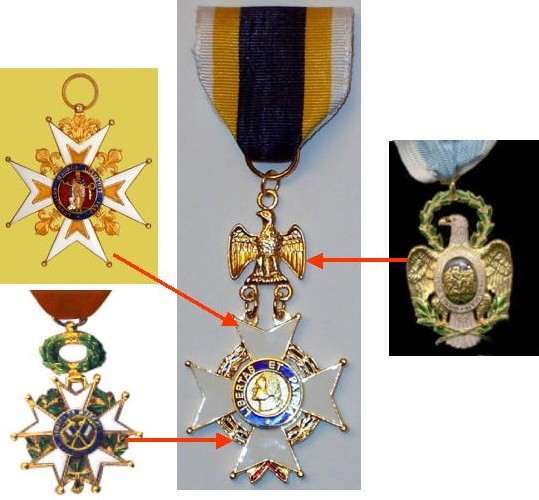
The insignia of the Society of the Sons of the American Revolution
This insignia takes the form of a cross suspended from an eagle. The cross is covered in white enamel and each of its eight points is extended by a golden pearl. It is directly inspired by two French decorations — one created by King Louis XIV, the Order of Saint Louis, and the other by Emperor Napoleon I, the Legion of Honor — and by an American decoration, the insignia of the Society of the Cincinnati, designed in 1783 by a French officer, Major Lenfant, the future architect of the city of Washington.
From the Order of Saint Louis, the insignia has retained the cross, but at its center is the profile of George Washington, surrounded by the motto “Libertas et Patria.” From the Legion of Honor, it has borrowed the laurel branches, which replace the fleurs-de-lis. The Order of Saint Louis, which was the first decoration given by the King of France in recognition of the military merit of officers regardless of their birth, was bound to appeal to the Americans. This choice also recalls the eminent role played by Louis XVI in committing France to a conflict without which American independence could not have been achieved. It pays tribute to the action of French troops alongside American forces, whose officers were numerous in wearing this cross. Finally, this cross places the Society under the protection of God, as is customary for an American patriotic association: God Bless America!
From the insignia of the Cincinnati, the eagle has been retained, which appears on the Great Seal of the United States of America, created in 1782. It recalls that both Societies honor the combatants of the War of Independence — through the eldest of their descendants for the older society, and through their entire lineage for the other.
See also: The NSSAR — Mission and Purpose — Allied Societies and Links
References
- The History of the National Society of the Sons of the American Revolution, John St. Paul, Pelican Publishing Company, Gretna (Louisiana) (1998)
- Centenial History of the National Society of the Sons of the American Revolution 1889-1989, Turner Publishing Company, Paducah (Kentucky) (1991)